PAS 2030 Certification
PAS 2030 specifies the requirements for installation of energy efficiency measures in existing buildings. Retrofit installers certified to PAS 2030 can demonstrate that they have robust procedures in place for customer care and standards compliance, providing professional assurance. Trade Engine can help you achieve this.
Why do I need PAS 2030 certification?
The UK has an urgent need to decarbonise 27 million homes within the next 10 years. This can only be achieved if there is a suitable and competent workforce that can provide high-quality installations with the correct assurances.
PAS 2030 certification demonstrates that retrofit installer firms and their work comply with standards requirements and allows them to access Government and Energy Company funding. Installing to the standard gives end customers reassurance that installation work is compliant and comes with suitable consumer protection.
We find that on achieving certification, our clients are able to access many new opportunities, including funded schemes and new contracts. PAS 2030 is usually a pre-requisite for those looking to tender for work within the energy efficiency and retrofit sectors. Certification also has the benefit of registration with TrustMark, the Government-endorsed quality scheme.

Jump to: The PAS 2030 process | QMS features | PAS 2030 measures | Apply now
The PAS 2030 certification process.
Whilst PAS 2030 certification can provide your business with wide-ranging and exciting growth opportunities, we realise that it can be a daunting prospect at the same time. Trade Engine provide a compliant PAS 2030 Quality Management System, installer training and certification support. Our dedicated mentors will guide you through the process of getting your business ready for certification and ensuring it is compliant, before referring you to a suitable UKAS-accredited certification scheme for your external audit.
With our help to get you ready, becoming PAS 2030 certified and registered with TrustMark, and starting work under Government-funded schemes is a simple and straightforward process involving the following steps.
Define your scope and apply
10 mins - 1 day
First, you'll need to decide on the energy efficiency measures (EEMs) you wish to become certified to install. A full list of PAS 2030 measures is available below. It's then time to apply to us - we will take you through the process from start to finish and will refer you to a certification scheme that meets your requirements.
It's also a good idea to download PAS 2030 from the BSI website, have a read through and let us know of any questions you might have.
Get a Quality Management System in place
1 - 2 days
We'll set your firm up with an account on the Trade Engine QMS Portal. This will contain all the necessary processes, procedures and work tools to implement PAS 2030 and we'll work with you to customise these for your company. One of our QMS Mentors will then be in touch to arrange your first training session via Zoom or Microsoft Teams.
Training and preparation for certification
1 - 2 weeks
We will work with you to prepare your business and your QMS for certification. This will involve processes such as gathering and uploading evidence on how your staff or subcontractors are qualified, building a register of tools and equipment, uploading your insurances, and so on. We guide you through this process and help you to gather together all of the information required, which will be stored within and managed by your Trade Engine Quality Management System.
Prepare some example projects
1 - 2 weeks
You'll need to demonstrate at least one example install of each EEM you're applying for certification for. We'll help you to identify these and then work with you to prepare the relevant PAS 2030 and PAS 2035 paperwork. You'll need to show your auditor things like a Retrofit Assessment, a validated Retrofit Design, as well as your Pre-Install Surveys, Risk Assessments, Method Statements, and all client handover documentation. Don't worry - our system provides a full set of templates and support guides to produce all of these in a compliant fashion.
To save on elapsed time, these activities can often be undertaken at the same time as the training and QMS preparation activities above.
Undertake an external certification audit
1 day
Once the above preparations have been undertaken, you'll be ready to be audited by your chosen external Certficiation Body. Just before this, we'll undertake an internal audit on your QMS and example projects to ensure that you're ready for the external audit. This will then take place either in-person at your office or remotely online. The auditor will spend around half a day running through your QMS to ensure that you meet the requirements for certification - this is sometimes called a 'desktop audit'. They will then visit your nominated work sites to inspect the quality and technical conformance of your example installation(s).
In some cases, the desktop audit and site audit may not be undertaken together. The desktop audit will always come first, but depending on your chosen Certification Body, you may have the site visit on another day.
Achieve PAS 2030 certification
If you meet all of the requirements outlined in PAS 2030, you'll receieve a recommendation for certification. We hope that with our robust processes and experience of helping over 1000 firms with this activity, this will always be the case.
The audit outcome will not be a simple pass or fail. Rather, any issues identified at the audit will be raised as nonconformities, and you'll be given time - usually around 6 weeks - to rectify these. Observations and recommendations for improvement will also be made by the auditor and it can really help to improve your firm's future processes if these are followed. Standards like PAS 2030 always aim for continual process improvement.
Maintain your certification
Your Certification Body will register you with the Oversight and Registration Body and, in almost all cases for PAS 2030, with TrustMark.
You can now issue a PAS 2030 Declaration of Conformity for each job you undertake to state that it complies with the requirements the standard. You will enter and store records for each project within your QMS, since your certification will be renewed and reviewed annually. Throughout each year, the Trade Engine team will remain on-hand to assist you with any of your QMS or certification requirements.
The total elapsed time, from application through to certification is usually around 4-6 weeks. It can be shorter or longer in certain cases, depending upon the number or type of measures you apply for certification for, the procedures and requirements of your chosen Certification Body, the size of your organisation, and your geographic location. The Trade Engine team will always try to guide you towards a route to certification that meets your requirements in the shortest time possible. If you have any further questions, you may find the answer on our FAQs page.
Trade Engine have long-established referral relationships with many of the UKAS-accredited Certification Bodies for PAS 2030 and most have either pre-approved our QMS for use, or audited it many times. A full list of PAS 2030 certification providers is available on the TrustMark website.
Features of the Trade Engine PAS 2030 QMS.
Having a compliant QMS in place is a vital part of PAS 2030 certification. Whilst it is possible to put one together on paper, we believe our cloud-based platform offers a lot more. It allows users to stay on top of their certification tasks, manage their projects in a conformant fashion every time, and works dynamically to achieve continual process improvements. For further information, to discuss your requirements, or to arrange a demonstration of the Trade Engine PAS 2030 QMS platform, please do contact us.
Fully-integrated QMS
All Policies & Procedures
PAS 2030 Workflow Tools
Multi-User Platform
Reporting & Lodgement
Mentored Support
Energy efficiency measures covered by PAS 2030.
We're often asked which energy efficiency measures (EEMs) the PAS 2030 standard covers. A full list is available below, arranged into the three categories: Building Fabrics, Building Services: Mechanical, and Building Services: Electrical, as the standard is. The Trade Engine QMS and our certification support covers all of these measures. We include up to 4 of them within our standard package, but further measures can be added at any stage.

Building Fabrics Measures
- Cavity wall insulation
- Draught proofing
- Energy efficient glazing and doors
- External wall insulation
- Flat roof insulation
- Floor insulation
- Hybrid wall insulation
- Internal wall insulation
- Loft insulation
- Pitched roof insulation
- Solar blinds and shutters
- Room-in-roof insulation
- Park Home insulation
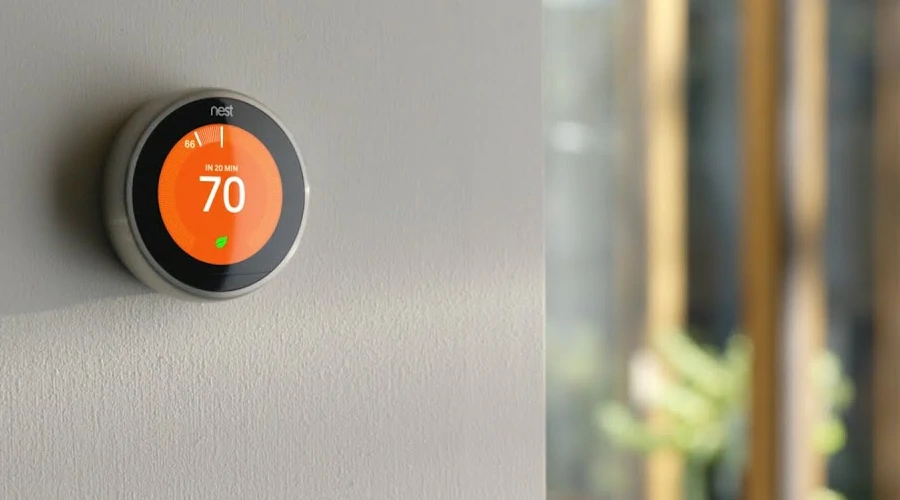
Building Services: Mechanical
- Gas-fired condensing boilers
- Oil-fired condensing boilers
- Flue-gas heat recovery
- Heating system insulation
- Heating and hot water controls
- Hot water systems
- Mechanical ventilation heat recovery
- Under-floor heating
- Warm-air heating
- Water-efficient taps and showers

Building Services: Electrical
- Electric storage heaters
- Lighting systems, fittings and controls
What about renewable technologies? These are not covered in the PAS 2030 standard, but rather by the Microgeneration Certification Scheme (MCS) which is a different certification. Trade Engine also provide a QMS, training and support for MCS, which can be integrated with our PAS 2030 solution where required.
Find out more about MCS hereStart your application today.
We hope that we've answered all your questions and you would like to work with us to achieve your PAS 2030 certification. Please fill out the form below to get started. On submission, a member of our team will be in touch within 24 working hours.
Contact us
Address:
Swan Park Business Centre
Kettlebrook Road
Tamworth
B77 1AG
E-mail: web@tradeengine.co.uk
Call us on 0330 223 0606
Open 9am to 6pm, Monday to Friday
News & updates
To receive our industry updates, please enter your e-mail address below and click 'Subscribe'
